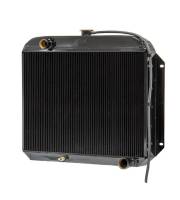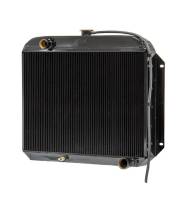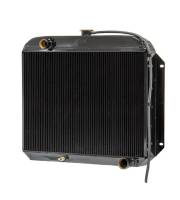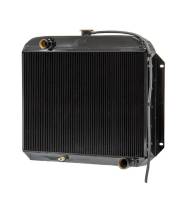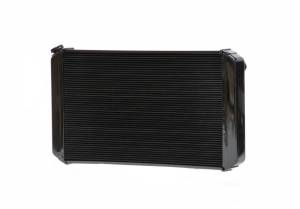
Unlike cheaper aluminum alternatives, brass and copper radiators provide superior cooling efficiency through better thermal conductivity and higher heat capacity. The materials themselves transfer heat more effectively, while the traditional tube-and-fin construction allows for optimal coolant flow patterns. These radiators maintain proper operating temperatures even under demanding conditions like stop-and-go traffic, mountain driving, or hot summer weather with air conditioning loads.
Johnson Radiator Works Manufacturing Excellence
Four-Core Construction for Maximum Cooling Capacity
Johnson Radiator Works manufactures their Nova radiators with four-core construction, providing substantially greater cooling capacity than original two-core or three-core factory units. This increased core thickness allows more coolant volume within the radiator while providing additional fin surface area for heat dissipation. The result is dramatically improved cooling performance without requiring modifications to your Nova's original mounting points or core support.
The four-core design proves especially beneficial for modified engines producing more horsepower than stock, vehicles equipped with air conditioning, or cars driven in hot climates. The additional capacity prevents overheating during extended idle periods and maintains consistent temperatures during highway cruising. Even stock applications benefit from the extra thermal margin that four-core construction provides.
Application-Specific Engineering for Nova Models
Johnson Radiator Works produces Nova radiators in configurations specific to your exact application. Separate part numbers address differences between six-cylinder and V8 applications, manual versus automatic transmissions, and various model year ranges. Each configuration features correct mounting tab positions, proper inlet and outlet locations, and appropriate core dimensions matching your vehicle's requirements.
The 1962-1967 models use different radiator designs than 1968-1974 applications due to core support and mounting changes. Automatic transmission-equipped vehicles require integral transmission cooler provisions, while manual transmission applications feature simpler core designs. Proper application matching ensures straightforward installation without adapters or modifications.
Brass and Copper Construction Advantages
Superior Heat Transfer and Thermal Conductivity
Brass and copper materials offer inherent advantages over aluminum in heat transfer applications. Copper provides approximately 60 percent better thermal conductivity than aluminum, meaning it transfers heat from coolant to surrounding air more efficiently. The brass tanks and copper core construction work together to maximize heat dissipation while maintaining structural integrity under pressure and thermal cycling.
This superior thermal performance translates to lower operating temperatures and greater cooling system reserve capacity. Your Nova's engine runs cooler under identical conditions compared to aluminum radiators, providing additional protection against overheating. The improved heat transfer also allows the radiator to recover more quickly when temperatures spike during hard acceleration or sustained high-load operation.
Longevity and Repairability Benefits
Traditional brass and copper radiators offer exceptional longevity when properly maintained. The materials resist corrosion better than aluminum when used with appropriate coolant formulations, and they maintain structural integrity through decades of thermal cycling. Quality construction from manufacturers like Johnson Radiator Works ensures leak-free operation for years of reliable service.
Perhaps most importantly, brass and copper radiators can be professionally repaired when damage occurs. Skilled radiator shops can resolder joints, replace damaged tubes, and restore cores to like-new condition. This repairability proves valuable for long-term restoration projects and helps maintain the investment in premium cooling components. Aluminum radiators typically cannot be repaired economically, requiring complete replacement when leaks develop.
Correct Application Selection and Fitment
Six-Cylinder versus V8 Applications
Nova radiators differ between six-cylinder and V8 applications due to varying heat rejection requirements and physical mounting considerations. Six-cylinder engines produce less heat, allowing slightly smaller core capacities, though Johnson Radiator Works four-core construction provides substantial reserve capacity even for modified six-cylinder builds. V8 applications require greater cooling capacity, with specific designs accommodating different engine configurations.
The mounting tab positions and core support interfaces also vary between six-cylinder and V8 installations. Using the correct application-specific radiator ensures proper fitment without modifications to mounting hardware or core support structures. Our technical specialists can help identify which configuration matches your Nova's original equipment or current engine installation.
Transmission Type Considerations
Manual transmission Novas use radiators without integral transmission coolers, while automatic transmission-equipped vehicles require radiators with built-in cooler provisions. The transmission cooler consists of separate passages within one radiator tank allowing transmission fluid to exchange heat with engine coolant. This integrated design provides efficient transmission cooling while simplifying installation compared to remote cooler solutions.
When ordering, you must specify your transmission type to receive the correct radiator configuration. Installing a manual transmission radiator in an automatic-equipped vehicle eliminates necessary transmission cooling, while using an automatic transmission radiator in a manual car simply leaves the cooler passages unused. Proper matching ensures optimal performance for your specific drivetrain combination.
Installation Requirements and Compatibility
Direct Factory Replacement Fitment
Johnson Radiator Works radiators mount directly into factory core support locations using original mounting provisions. The radiators include correct upper and lower mounting tabs positioned precisely to align with factory attachment points. This direct-fit design eliminates the fabrication work or custom brackets required with universal radiators not engineered for specific applications.
The radiators maintain factory external dimensions ensuring proper clearance with surrounding components including fan shrouds, belts, and pulleys. Hose connections position correctly for original upper and lower radiator hoses, though we recommend replacing hoses whenever installing a new radiator. Proper fitment extends to fan clearance, ensuring adequate space for mechanical or electric fan installations.
Supporting Component Considerations
Radiator replacement provides an ideal opportunity to address supporting cooling system components. We recommend installing new radiator hoses, proper constant-tension clamps, fresh coolant formulated for brass and copper radiators, and verified thermostat operation. These supporting components work together ensuring optimal cooling system performance and preventing premature radiator failure from external issues.
Fan shroud installation proves critical for maximizing radiator efficiency. A properly positioned shroud directs all fan airflow through the radiator core rather than allowing recirculation around blade tips. For electric fan conversions, ensure adequate CFM capacity and proper relay control preventing continuous operation. Our technical team can recommend appropriate supporting components matched to your specific Nova application.
Professional Installation and System Service
New radiator installation demands careful attention to proper procedures ensuring long-term reliability. Thoroughly flush the cooling system removing old coolant, rust particles, and contamination before installing the new radiator. Clean all hose connections and inspect for damage requiring replacement. Install the radiator carefully avoiding stress on mounting tabs or core damage from mishandling.
After installation, fill the system with appropriate coolant mixture and properly bleed all air pockets. Run the engine through complete warm-up cycles while monitoring for leaks and verifying proper thermostat operation. Check coolant level after initial heat cycles and top off as necessary. Proper break-in procedures ensure trouble-free operation and maximum radiator longevity.
FAQS: Brass and Copper Radiators for My 1962-1974 Chevy Nova
What are the advantages of brass and copper radiators compared to aluminum radiators for my Nova?
Brass and copper radiators offer several significant advantages over aluminum construction for classic Nova applications. First, copper provides approximately 60 percent better thermal conductivity than aluminum, transferring heat from coolant to air more efficiently and maintaining lower operating temperatures under identical conditions. Second, brass and copper radiators can be professionally repaired when damage occurs, while aluminum radiators typically require complete replacement when they leak. Skilled radiator shops can resolder joints, replace tubes, and restore brass and copper cores to like-new condition, protecting your investment in premium cooling components. Third, brass and copper construction offers superior corrosion resistance when used with appropriate coolant formulations designed for mixed-metal cooling systems. Fourth, traditional brass and copper radiators maintain authentic period-correct appearance critical for concours restorations and show vehicles. While aluminum radiators cost less initially and weigh slightly less, brass and copper radiators provide superior performance, longevity, and repairability making them the preferred choice for serious Nova restorations and high-quality builds.
How does four-core construction improve cooling performance compared to original radiators?
Four-core construction provides substantially greater cooling capacity through increased core thickness allowing more coolant volume within the radiator while dramatically expanding fin surface area for heat dissipation. Original Nova radiators typically featured two-core or three-core designs adequate for stock engines under normal conditions. Four-core radiators offer 30 to 50 percent more cooling capacity without requiring modifications to mounting points or core supports. This additional capacity proves especially valuable for modified engines producing more horsepower than stock, vehicles equipped with air conditioning systems adding extra heat load, or cars driven in hot climates or stop-and-go traffic. The extra thermal margin prevents overheating during extended idle periods common in modern traffic conditions, maintains consistent temperatures during sustained high-speed driving, and provides reserve capacity for demanding conditions like mountain grades or hot weather. Even completely stock Nova engines benefit from four-core construction through improved temperature stability and extended cooling system component life resulting from reduced thermal stress.
How do I determine which radiator configuration is correct for my specific Nova or Chevy II?
Selecting the correct radiator requires identifying several critical vehicle specifications. First, determine your exact model year range because 1962-1967 models use different radiators than 1968-1974 applications due to core support and mounting changes. Next, identify your engine type since six-cylinder and V8 applications require different radiators due to varying heat rejection requirements and mounting considerations. Third, specify your transmission type because automatic transmission vehicles require radiators with integral transmission cooler provisions, while manual transmission applications use simpler core designs without cooler passages. The transmission cooler consists of separate passages within the radiator tank allowing transmission fluid heat exchange. When ordering, you need to provide your model year, engine type (six-cylinder or V8), and transmission type (manual or automatic). Johnson Radiator Works manufactures application-specific radiators with correct mounting tab positions, proper inlet and outlet locations, and appropriate core dimensions for each configuration. Our technical specialists can verify the correct application if you provide detailed vehicle information or can help identify specifications based on your vehicle identification number.
What coolant should I use with brass and copper radiators, and how do I maintain them?
Brass and copper radiators require coolant formulations specifically designed for mixed-metal cooling systems to prevent galvanic corrosion and maintain optimal performance. Use high-quality ethylene glycol or propylene glycol antifreeze designed for classic cars with brass and copper components, avoiding coolants formulated exclusively for aluminum systems. Mix coolant at the proper concentration, typically 50/50 with distilled water for most climates, providing freeze protection and corrosion inhibition. Change coolant every two to three years because corrosion inhibitors deplete over time, losing effectiveness at preventing internal deterioration. Flush the entire cooling system during coolant changes, removing contamination and corrosion products that accumulate. Inspect coolant condition annually, looking for discoloration, contamination, or acidity indicating premature degradation. Never mix different coolant types or colors, as incompatible formulations can cause precipitation, reduced heat transfer, and accelerated corrosion. Maintain proper coolant level checking when cold, and investigate any level drops indicating leaks. With proper coolant selection and regular maintenance, brass and copper radiators provide decades of reliable service in your Nova.
Can I install a brass and copper radiator myself, or should I hire a professional?
Brass and copper radiator installation is manageable for mechanically inclined enthusiasts with appropriate tools and careful attention to proper procedures. The installation requires basic hand tools, a drain pan for coolant collection, and several hours of work depending on your experience level. Critical steps include completely draining the old coolant, carefully removing the original radiator without damaging surrounding components, thoroughly cleaning the cooling system, properly positioning and securing the new radiator without stressing mounting tabs, installing new hoses with constant-tension clamps, refilling with appropriate coolant mixture, and properly bleeding all air pockets from the system. However, several situations warrant professional installation. If your Nova has air conditioning requiring refrigerant line disconnection, professional service with proper recovery equipment is legally required. If the cooling system shows signs of contamination, scale buildup, or previous repairs, professional flushing equipment ensures complete cleaning. If you lack experience with cooling system service or feel uncomfortable working with pressurized systems, a professional shop prevents costly mistakes. Most professional installations cost between 200 and 400 dollars depending on your location and whether additional services like system flushing or hose replacement are needed. Many enthusiasts choose professional installation for the peace of mind that proper procedures were followed and the warranty protection that professional shops provide.